Psilocybin for Depression: Neuroscience
Psilocybin for treatment-resistant depression: fMRI-measured brain mechanisms. Carhart-Harris et al (2017). Nature, Scientific Reports, 7, 13187, 1-11. DOI:10.1038/s41598-017-13282-7
Abstract
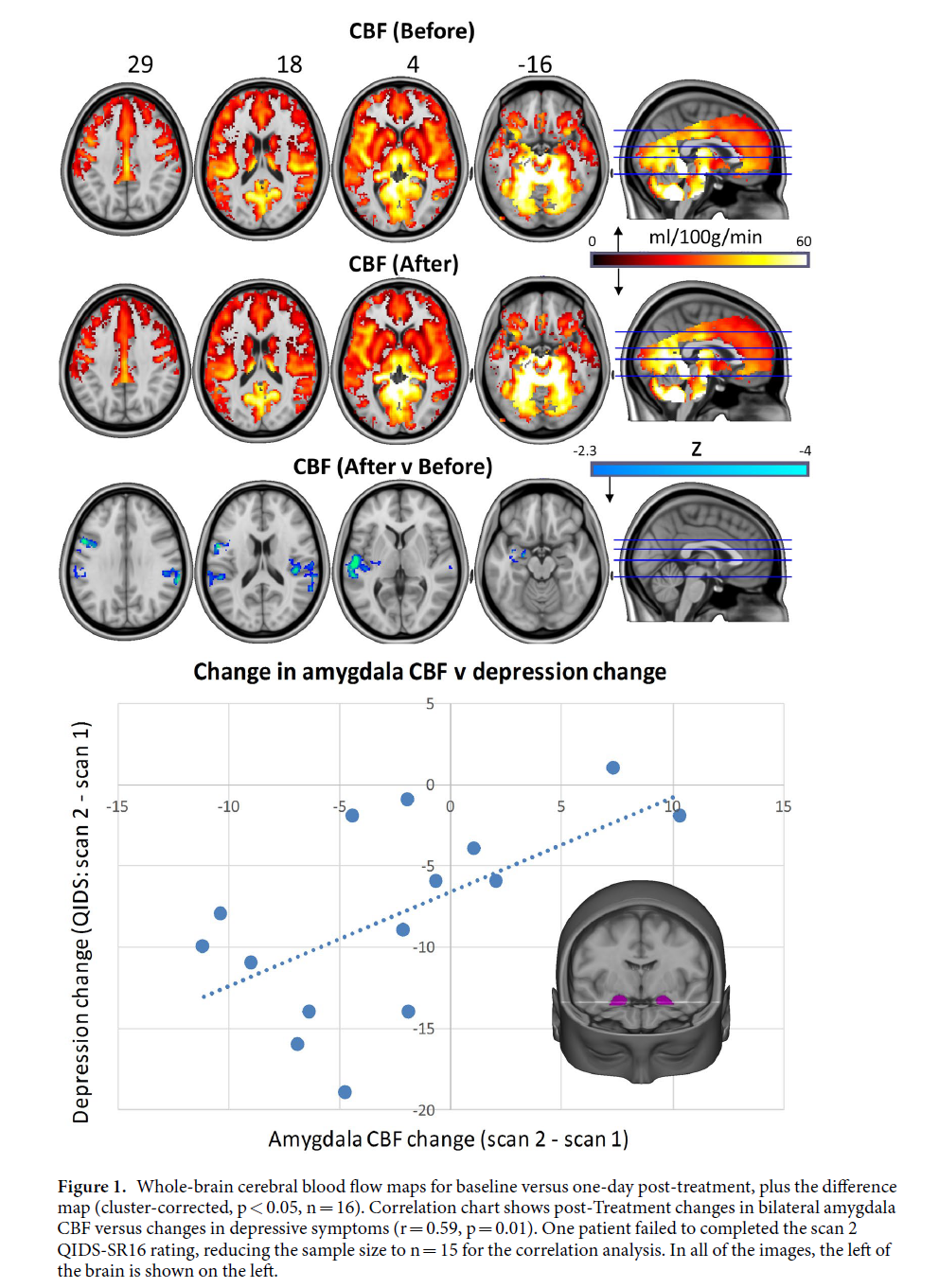
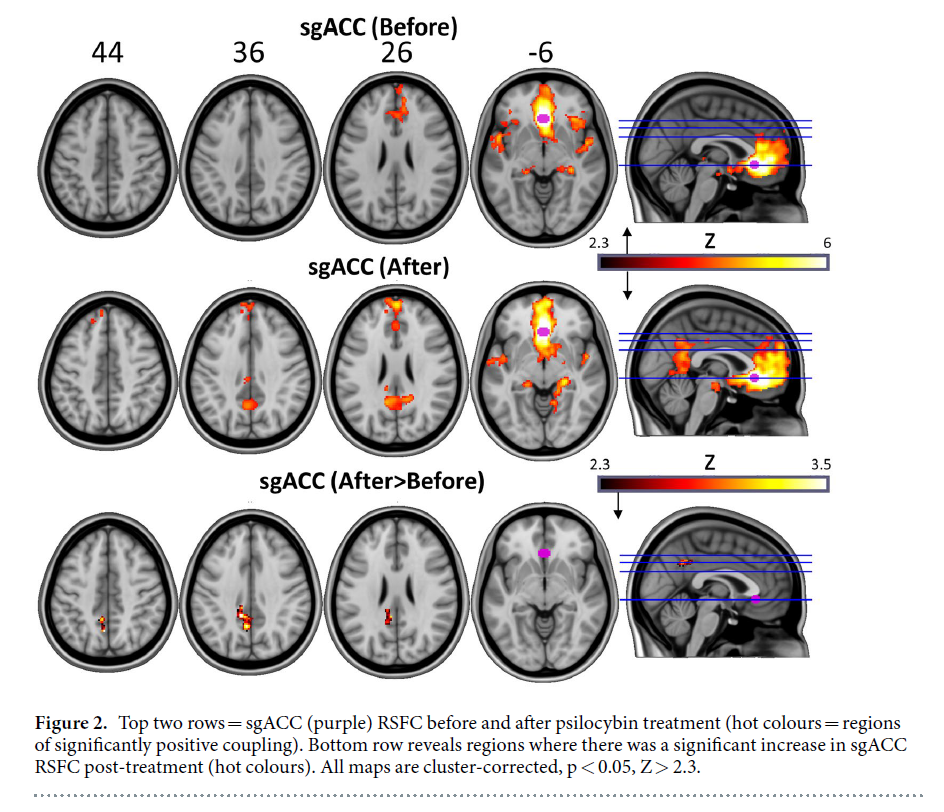
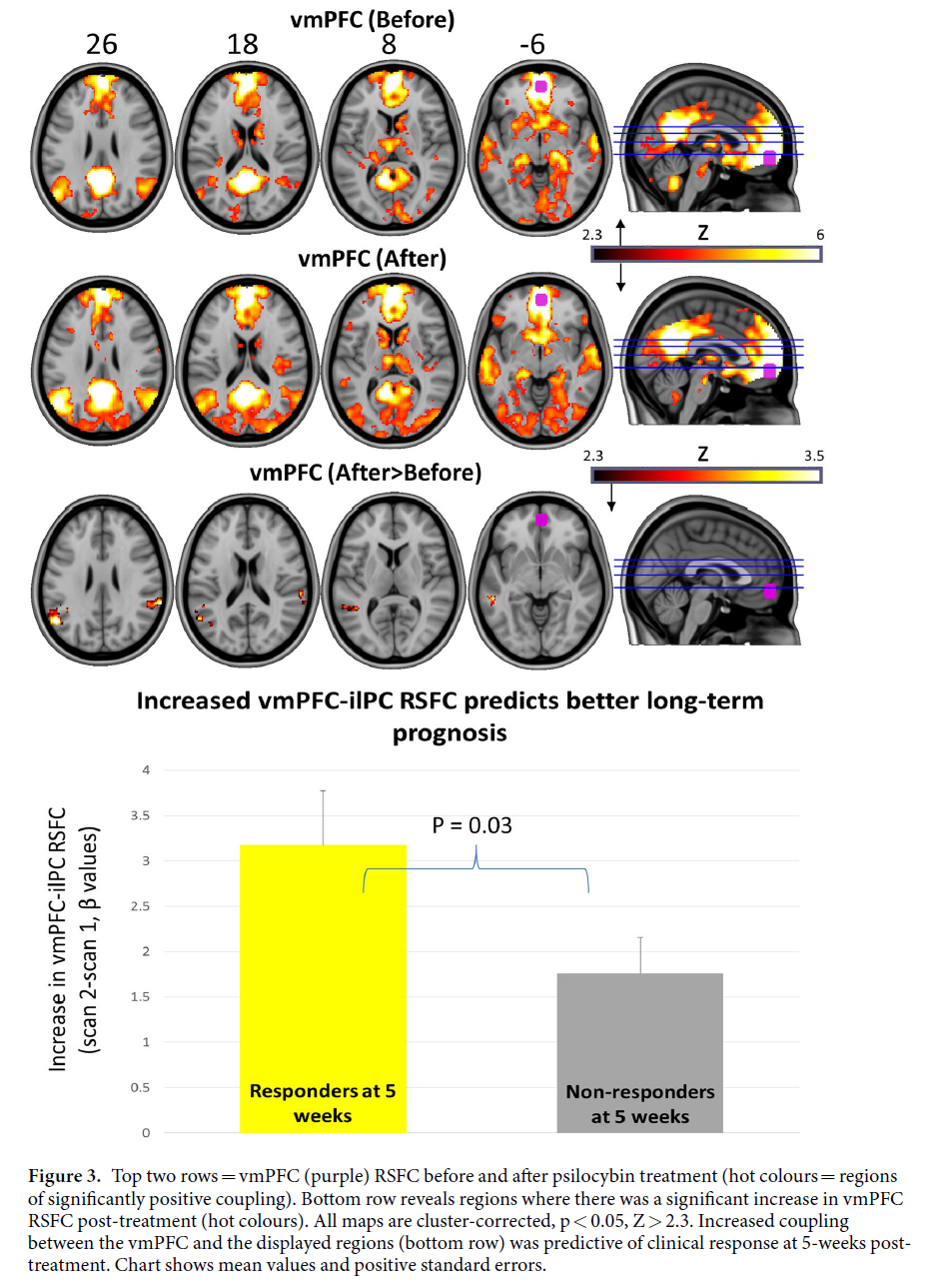
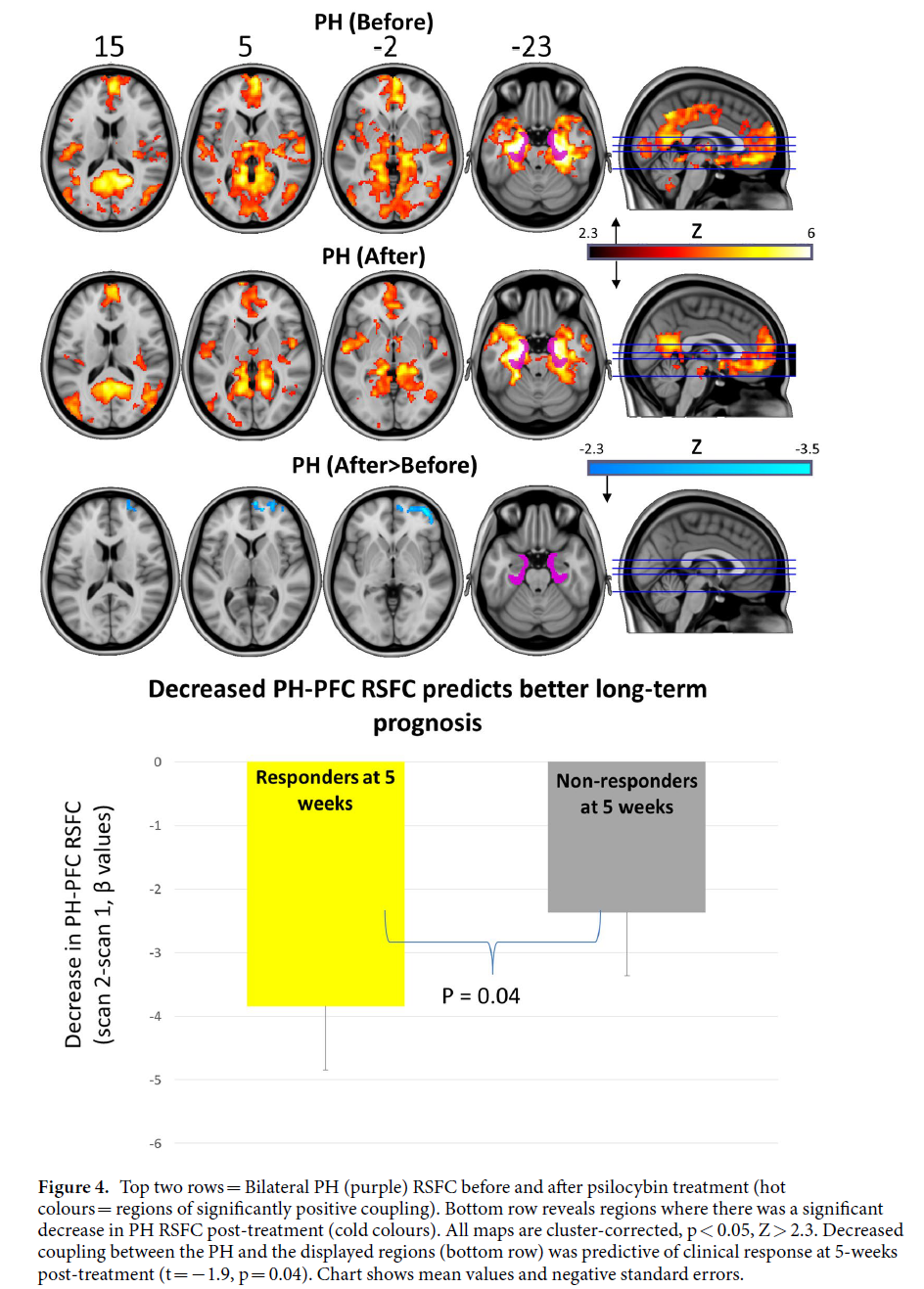
Psilocybin with psychological support is showing promise as a treatment model in psychiatry but its therapeutic mechanisms are poorly understood. Here, cerebral blood flow (CBF) and blood oxygen-level dependent (BOLD) resting-state functional connectivity (RSFC) were measured with functional magnetic resonance imaging (fMRI) before and after treatment with psilocybin (serotonin agonist) for treatment resistant depression (TRD). Quality pre and post treatment fMRI data were collected from 16 of 19 patients. Decreased depressive symptoms were observed in all 19 patients at 1-week post-treatment and 47% met criteria for response at 5 weeks. Whole-brain analyses revealed post-treatment decreases in CBF in the temporal cortex, including the amygdala. Decreased amygdala CBF correlated with reduced depressive symptoms. Focusing on a priori selected circuitry for RSFC analyses, increased RSFC was observed within the default-mode network (DMN) post-treatment. Increased ventromedial prefrontal cortex-bilateral inferior lateral parietal cortex RSFC was predictive of treatment response at 5-weeks, as was decreased parahippocampal-prefrontal cortex RSFC. These data fill an important knowledge gap regarding the post-treatment brain effects of psilocybin, and are the first in depressed patients. The post-treatment brain changes are different to previously observed acute effects of psilocybin and other psychedelics’ yet were related to clinical outcomes. A ‘reset’ therapeutic mechanism is proposed.
Results: Treatment with psilocybin produced rapid and sustained antidepressant effects. …the mean depression score (QIDS-SR16) for the week prior to the pre-treatment scan was 16.9 ± 5.1, and for the day of the post-treatment scan, it was 8.8 ± 6.2 (change = −8.1 ± 6, t = −5.2, p < 0.001). The mean QIDS-SR16 score at baseline (screening) was 18.9 ± 3, and for 5-weeks post-treatment, it was 10.9 ± 4.8 (change = −8 ± 5.1, t = −6.3, p < 0.001). Mean change values for those included in the BOLD analyses were −7.3 ± 5.3 (change from scan 1 to scan 2) and −8.2 ± 5.2 (change from baseline to 5 weeks post-treatment). Both contrasts were highly significant (t = −5.2 and −6.2, p < 0.001). Six of the 15 (BOLD) and 16 (ASL) patients met criteria for treatment response (≤50% reductions in QIDS-SR16 score) at 5 weeks. Of the full 19 patients, all showed some decrease in depressive symptoms at 1 week, with 12 meeting criteria for response (change = −10.2 ± 5.3, t = −6.4, p < 0.001). All but one patient showed some decrease in QIDS-SR16 score at week 5 (with one showing no change) and 47% met criteria for response (change = −9.2 ± 5.6, t = −6.7, p < 0.001).